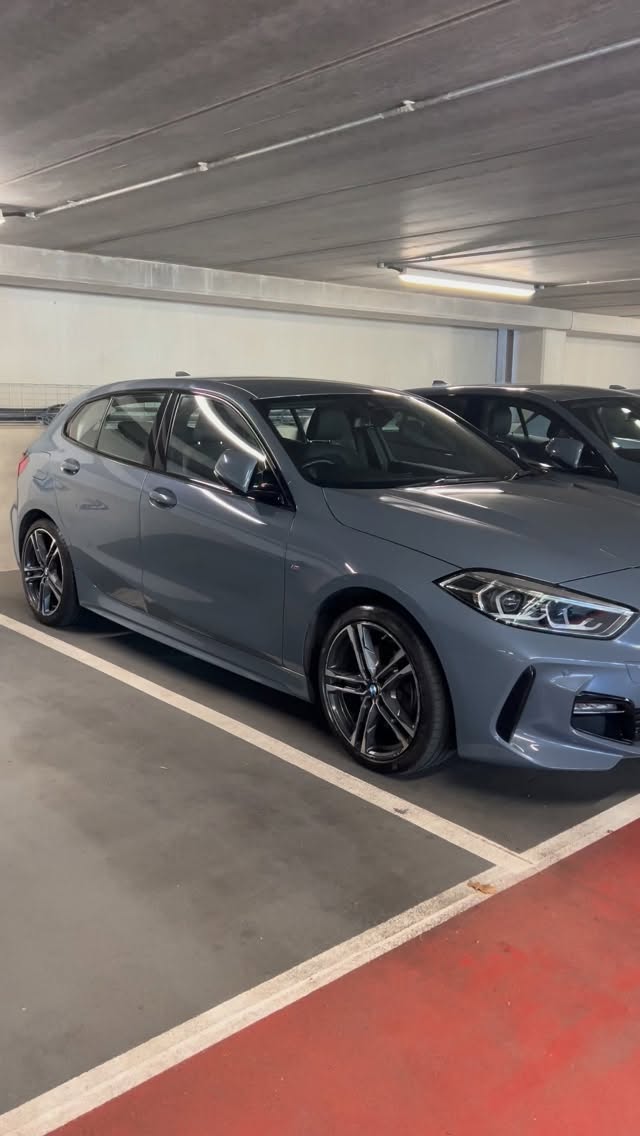
The high-voltage connector to the rear e-motor is the thing to check on a Toyota RAV4 Plug-in (XA50) before winter. Early corrosion is showing up there on low-mileage examples that sit outside — and it is the kind of fault that passes an MOT clean while it quietly gets worse underneath.
What is the RAV4 Plug-in (XA50)?
The XA50 is the current-generation Toyota RAV4 Plug-in hybrid — a petrol-electric car with a motor on the rear axle that gives it all-wheel drive. That rear e-motor is fed through a high-voltage connector in the car’s orange cabling, and it sits low under the car, right where road spray, standing water and winter salt reach it. Three things make this generation one to keep an eye on:
- the rear e-motor sits low and exposed, behind the rear wheels
- the connector is sealed, but seals age on cars that live outside
- corrosion shows up on low-mileage examples, because time and weather do the damage, not distance
The Plug-in is the RAV4 that charges from a cable, so the high-voltage side of the car carries more of the everyday workload than on a conventional hybrid — and the rear e-motor is the half of that system that gives the car its all-wheel drive. It is also the half that lives closest to the road.
Why does the high-voltage connector corrode on this generation?
High-voltage connectors are sealed for good reason, but no seal stays perfect on a car that never gets a chance to dry out. On the XA50, the connector to the rear e-motor sits in the path of spray thrown up by the rear wheels, and a street-parked car gets none of the drying off that a garage provides. Winter makes it worse: gritting salt is hygroscopic, so it holds moisture against the connector long after the road has dried, and freeze-thaw cycles stress the seal each time trapped water expands. It is a timing thing too — a car heading into its fourth winter has pushed the same seal through several seasons of salt and standing water, and that is when the earliest examples start to show it.
We’ve seen early corrosion on the high-voltage connector to the rear e-motor on low-mileage XA50s that sit outside — it shows up more on Surrey and south-west London street-parked cars than anywhere else we work.
Will an MOT catch it?
No. The MOT inspects for structural corrosion in the prescribed areas of the body and underside, but high-voltage connectors are not part of the test — so a RAV4 Plug-in can pass an MOT clean while corrosion is already forming on the rear e-motor connector. It tends to surface instead as a warning light on the dash, the car leaning on its petrol engine more than it used to, or a fault code the next time the car is read with a diagnostic machine. Corrosion across a connector raises its resistance, and once the control module reads an out-of-range signal it logs a fault and dials back the e-drive to protect the system. The check has to be deliberate — nothing else catches it for you.
What does it cost if you leave it?
Left alone, corrosion on a high-voltage connector keeps going — it does not clear up on its own. The expensive part is rarely the connector itself; it is the diagnosis and the labour of getting to it. A car that flags a high-voltage fault has to be worked through properly rather than guessed at, and the longer the corrosion has spread, the more there is to put right. Caught early it is a clean-and-protect. Left late it becomes a replacement and a diagnostic bill on top — and if it happens outside warranty, that bill lands with you. Worth knowing: corrosion like this is environmental wear, not a driving fault, so it shows up on cars that have been serviced on time and driven gently.
What can you do yourself this week?
A visual check takes minutes and needs no tools. Park on flat ground and look at the rear of the car from underneath — a torch helps. You are looking for:
- a white or green crust around the connector
- a cracked, split or perished seal
- dirt or salt packed into the connector area
- swelling or staining on the cabling nearby
One pointer: a white or green crust is corrosion, where ordinary road grime is brown or black and wipes away — if it does not wipe clean, get it looked at. And look, don’t touch: the orange cabling is high-voltage, so leave the plug alone. If the car lives outside on a street, do this before the first gritting of the season — the kind of street-parking that is standard in Kingston upon Thames and across south-west London.
What we look at on the XA50 during a service
A service check goes further than a glance from the kerb. The underside inspection includes the rear e-motor connector and the high-voltage cabling, so early corrosion is spotted and recorded — including on cars that still look clean up top, which is where this problem likes to hide. Every item is marked OK, advisory or urgent and logged in writing, so the connector’s condition is on the record rather than guessed at. If you are in Surrey, car valeting in Epsom includes the same underside look as part of the visit.
A corroded connector on the rear e-motor is the difference between a clean-and-protect and a diagnostic bill. It is exactly the kind of thing a 20-point Vehicle Health Check catches with a photo and a condition note before it becomes a fault code.