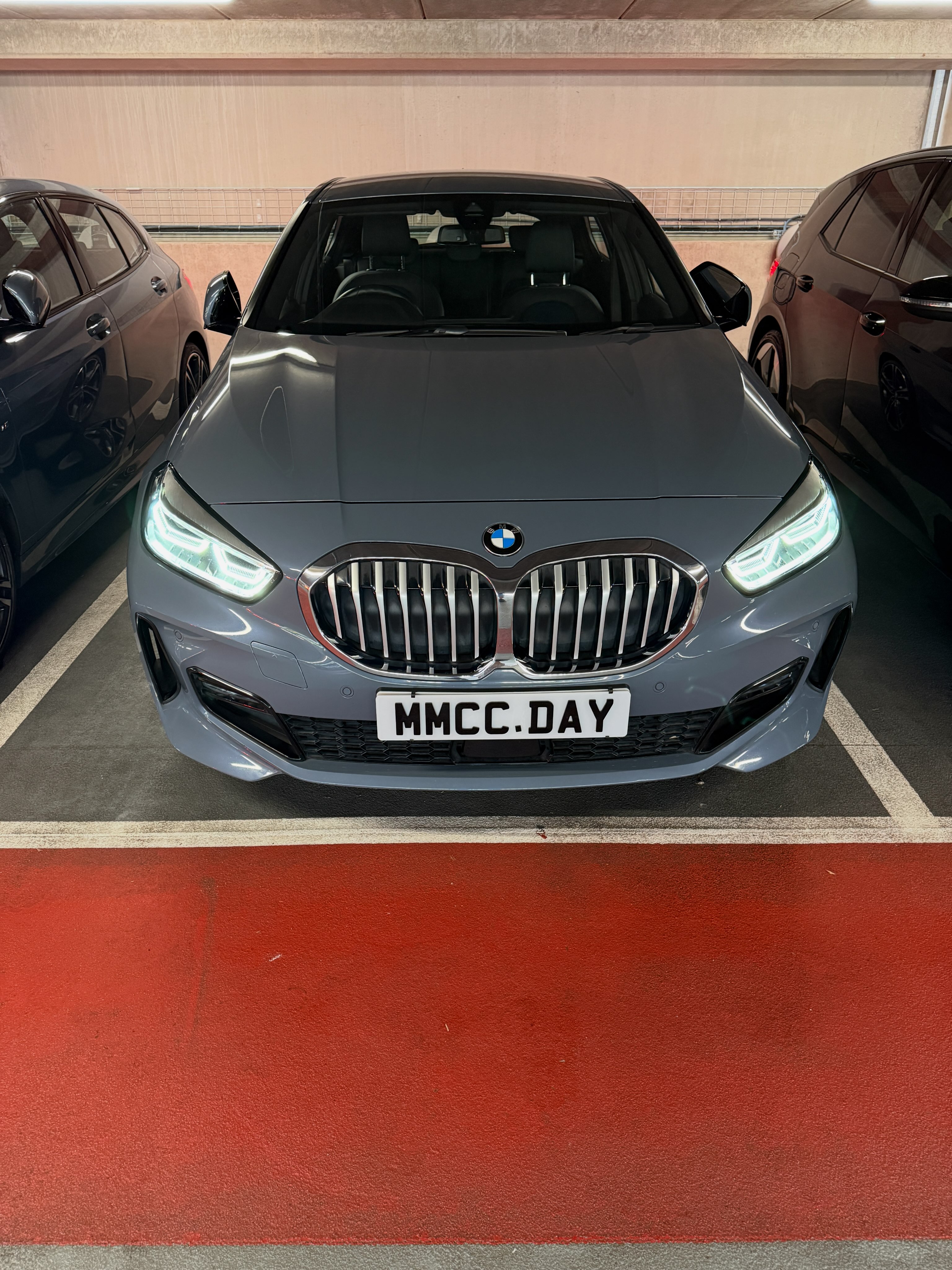
Parking on a residential street in Richmond or Barnes means living under a canopy. Plane trees and lime trees line the kerbs in both postcodes — TW9 down toward the river and SW13 around the green — and what they drop lands on the roof, the bonnet and the glass. The two substances that do real damage are tree sap and bird droppings, and the damage is a matter of how long they sit, not what they are. Neither needs a driveway or a hose to put right: a waterless valet works at the kerbside, lifting both before they etch into the clearcoat.
What street-side parking does to paint
The threats at the kerb are different from those on a driveway. The main ones:
- Tree sap — sticky, and it hardens under sunlight, bonding to the clearcoat and pulling at it as it cures and shrinks
- Bird droppings — acidic enough to etch the lacquer, leaving a dull ring that polishing cannot always remove
- Blossom, pollen and seed casings — softer, but they hold moisture against the panel
- Brake dust and road film — heavier in stop-start traffic than on open roads
The common factor is dwell time. A droplet of sap left through a warm week etches deeper than the same droplet lifted the day it landed.
Why Richmond and Barnes kerbs are harder on paint than a driveway
These two areas raise the question for a reason. Richmond and Barnes are leafier than most of London — that is the appeal, and it is also the exposure. A car parked under street trees collects more sap and more droppings than one parked on a bare drive, and there is no driveway to retreat to. Many of the kerbs are resident-permit parking, and a hose stretched across a pavement is not a realistic option on a Sunday morning.
Being riverside adds a further variable. Cars parked in TW9 and SW13 wake with dew for much of the year, and a damp surface keeps droppings and sap working longer than a bone-dry panel. The worst combination is the one these streets produce by default: a tree overhead, a damp start, and no way to wash the car without taking it somewhere.
The answer is not to wash more often. It is to be able to wash the car where it already sits.
Waterless valeting: the kerbside answer
A waterless valet needs no water supply, no hose and no drainage. The system is applied by hand at the car, using a pre-treatment that encapsulates the surface contamination so it can be lifted without dragging it across the paint, followed by a finisher that leaves ceramic-grade protection on the panel. Because the whole job happens at the roadside, it fits the way Richmond and Barnes actually park — a car that lives on the street can be cleaned on the street, with no water running into the gutter.
For a street-parked car in TW9 or SW13, our mobile car valeting in Richmond service is built around exactly this: the car stays where it is, and the sap and droppings come off before they bond.
Sap and droppings are a condition problem, not just a cosmetic one
Both are worth taking seriously because the damage is cumulative and it starts beneath the surface. Sap shrinks as it cures, and as it shrinks it can pull the clearcoat with it, opening micro-cracks that let water in. Bird droppings are acidic; once the acid has worked through the lacquer, the only repair is paint — polishing can improve the look but cannot restore what has gone.
The same is true of the less obvious build-up. Brake dust left on alloy wheels corrodes the finish over months; road film on glass and lights dulls what a driver relies on. The value in a routine check is catching these before they become a bill.
What to look for, and when
No equipment is needed to spot the early signs. On a dry day, run a hand over the roof and bonnet: rough patches that do not wipe away are usually cured sap, and any dull or milky ring is the start of an etch. The moment to deal with them is before they harden.
A 20-point Vehicle Health Check done during a valet goes further than a visual once-over — it records the condition of the paint, glass, lights and wheels point by point, with a note and a photo against anything that needs attention, so a small etch does not become a repaint.
What happens at the kerbside
The process is the same wherever the car is parked. The surface is treated with the pre-treatment, lifted clean, and finished with protection. There is no residue left on the pavement, no water to drain, and the car is not moved. For neighbouring areas, the same system runs through mobile car valeting in Twickenham and mobile car valeting in Teddington, so a car parked on a side street a few postcodes away gets the same kerbside care.
Book a service in your area through Booking.