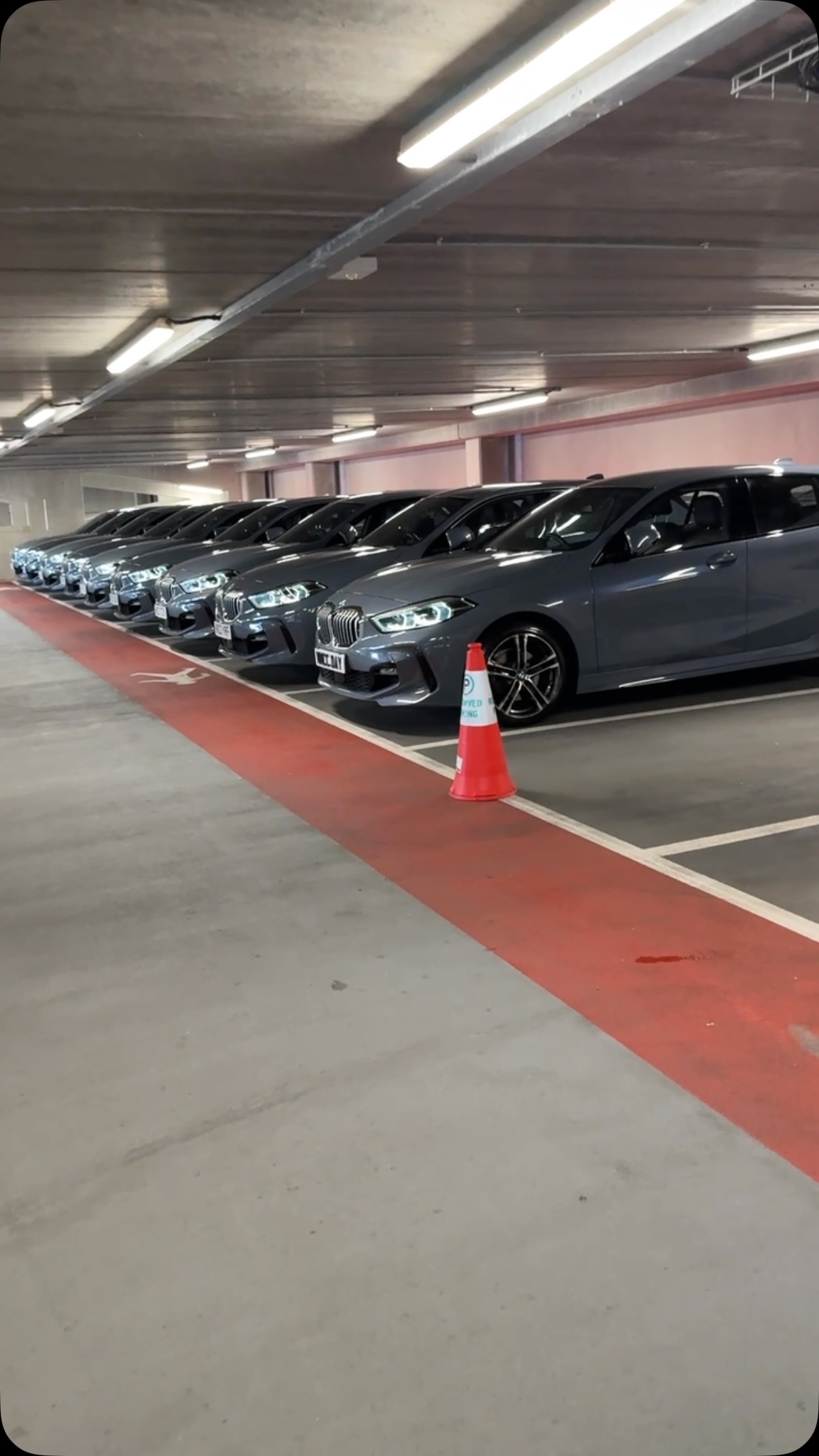
Depot washing lands on the water risk register because it concentrates a water- and effluent-heavy activity at a single address, in a region the Environment Agency already classes as seriously water stressed. For a fleet manager defending a budget and a compliance position at the same time, the answer is not to wash less often — it is to move the wash off the site’s water and effluent account altogether.
Why Southern England puts corporate water use under scrutiny
The South East of England is among the most water-stressed regions in the UK. The Environment Agency’s water-stress classifications place much of the area in the highest band, owing to population density and abstraction pressure on rivers and groundwater; its Catchment Abstraction Management Strategies flag whole catchments as over-abstracted or over-licensed. When river flows and reservoir levels fall, water companies impose Temporary Use Bans, and commercial water use comes under scrutiny even where formal exemptions apply — a depot keeping cars washed through a drought is a metered, visible consumer at the moment its water company is asking everyone to cut back. The operating area MMCC serves, from mobile car valeting in Guildford to mobile car valeting in Kingston upon Thames, sits squarely inside that classification.
A depot that washes cars on site sits directly in that exposure. Its water use is metered, its discharge is visible, and its consumption peaks exactly when the regulator is looking hardest. For a large corporate estate, that exposure is not only operational but reputational — a site visibly washing cars through a drought draws attention for the wrong reasons. For an employer with a staff car park or a fleet of company cars, the real question is not whether water is a risk — it is whether the wash sits on the risk register or off it.
What makes on-site washing a concentrated risk
A conventional on-site wash uses 100–150 litres per car and sends the runoff somewhere — a drain, a soakaway, or the open yard. That single fact creates three exposures at once: a metered water demand, a trade-effluent question, and a data gap.
| Exposure | Conventional on-site wash | Mobile waterless wash |
|---|---|---|
| Water per car | 100–150 litres, drawn and metered on site | No site water draw; roughly 150 litres conserved per car (planning estimate) |
| Trade effluent | Runoff to drain or ground, subject to consent | Process designed to avoid trade effluent from the service site |
| Vehicle-level record | None | Litres, CO2e, kWh, wastewater avoided and plastic-bottle-equivalent per car |
| Reporting trail | Manual estimates | Exportable, mapped to Scope 3 Category 1 |
The waterless process draws no site water and is designed to avoid trade effluent from the service site, so the two hardest exposures come off the register without changing how often cars are cleaned.
Where trade effluent turns a wash into a consent problem
Wash water carries detergent, road film and suspended solids. Discharging it to a drain without consent is an offence under the Water Industry Act 1991, and even a consented discharge becomes an obligation the estate has to hold, renew and evidence — a document a procurement or compliance team must be able to produce on demand. A process designed to avoid trade effluent from the service site removes that consent obligation entirely: there is no runoff to account for, no drainage plan to defend, and nothing for an auditor to chase across the estate. For a multi-site corporate, that is the difference between a compliance item that exists once and one that has to be managed separately at every location.
What a water-stressed summer does to a depot’s schedule
During a drought, a depot’s on-site wash changes status even if it can legally continue: the estate has to justify its water use, its supply or abstraction position comes under review, and a visibly busy wash bay through a ban reads badly to staff, customers and local partners. A mobile waterless service removes that question before it is asked — it draws no site water and produces no trade effluent, so the wash and its record carry on under the same process. The value to a fleet is not the litres saved on a normal day; it is the certainty that the schedule and the record both survive the summer the region runs dry.
How the water footprint lands in Scope 3 reporting
For a fleet that buys washing as a service, the water and its associated emissions sit in Scope 3 Category 1 — Purchased Goods and Services, one of the categories CSRD Article 19a requires reporters to cover under ESRS E1. DEFRA’s conversion factors put water supply at 0.149 kgCO2e per cubic metre and water treatment at 0.272 kgCO2e per cubic metre. At a planning estimate of 150 litres conserved per car — 0.15 cubic metres — that is roughly 0.063 kgCO2e of water-related emissions per wash, plus the wastewater that never enters the treatment stream. The carbon figure is modest, and that understates the point: the material exposure is the water and the effluent themselves, and those are what a Fleet Insight Platform records rather than estimates. The wastewater-avoided figure is the sharper signal for a corporate estate — it is the volume that never reaches a treatment works or a surface-water drain, reported the same way a facilities team reports avoided energy or avoided waste.
What the ESG Impact module records, and where it goes
The ESG Impact module records, per service, litres conserved, CO2e in kilograms, kWh, wastewater avoided and a plastic-bottle-equivalent figure, mapped to Scope 3 Category 1 — Purchased Goods and Services. Those per-car records aggregate into a fleet-level position a manager can export and hand to finance, using the same method set out on the ESG methodology page and in the exportable ESG report. That is the Compliance & ESG pillar in practice: a per-service record that survives the question every audit ends with — where does this number come from?
Why a planning estimate beats an aspirational target
MMCC’s water figure is a planning estimate of roughly 150 litres conserved per car, treated as a baseline rather than a headline. That distinction matters in ESG reporting: a conservative planning estimate that actual service records can outperform is defensible, while an aspirational target is the thing an auditor is trained to question. The ESG Impact module records actual litres per service, so the planning estimate is the starting position and the aggregated record is the evidence.
The inspection is what makes the water claim defensible
A water number without a record is an estimate a compliance team cannot defend. The same visit that removes the water and effluent exposure also produces a 20-point Vehicle Health Check on every car, covering tyres and visibility, under-bonnet levels, interior controls and exterior condition — each point scored OK, Advisory or Urgent, with technician notes and dated photographs for anything flagged. The platform stores and displays those dated photographs per vehicle and aggregates the inspection by registration with urgent and advisory counts, vehicle history and CSV export; a manager reviews the history against the published 20-point health check framework. The condition record is aligned to the BVRLA Fair Wear and Tear framework, which means the same visit that conserves water also produces the documented condition history a fleet needs at lease return.
The same process works at five cars or five hundred
Because the wash is mobile and waterless, the same process runs at five cars or five hundred — no fixed wash bay to build, no drainage to consent, and no multi-year lock-in. The compliance side is documented rather than asserted: a toolkit covering COSHH, RAMS and the equipment list, so procurement can evidence the decision before committing. A pilot proves the water and reporting numbers on a handful of cars before any wider roll-out, which is how a fleet manager defends a budget rather than taking a service on faith.
Fleet managers can map their site’s water, effluent and reporting position through a Fleet Readiness Audit.