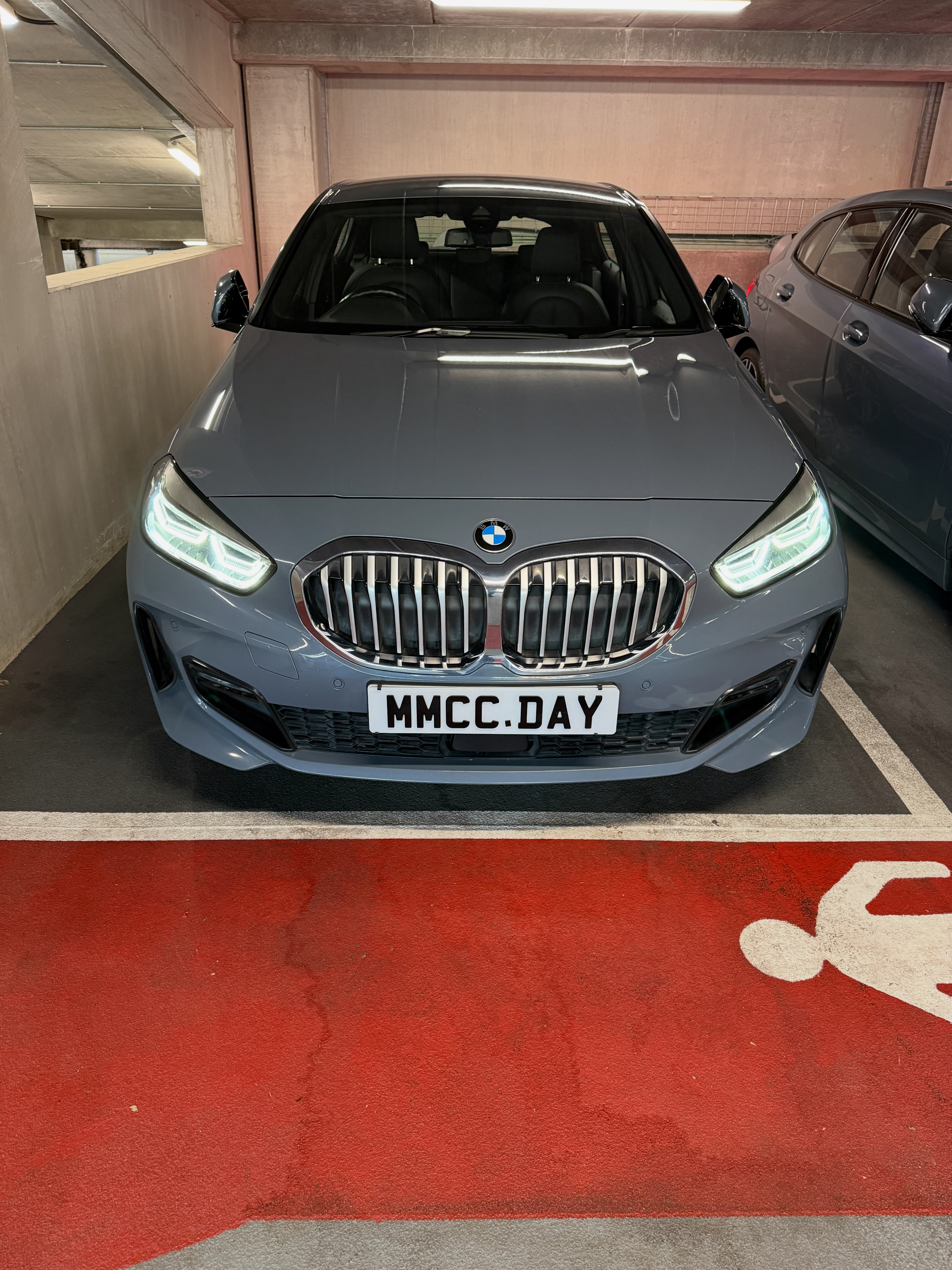
For most cars parked in Sunbury or Shepperton, keeping the paintwork clean without a hosepipe comes down to one thing: a waterless valet that swaps a bucket and hose for a measured spray and clean microfibres. It is booked to wherever the car sits — a driveway, a residents’ bay or a marked space in TW16 or TW17 — and needs no outside tap, no water supply and no drain.
How does waterless car cleaning work without a hose?
A waterless valet lifts dirt from the surface with a spray-based pre-treatment, then wipes it away with clean microfibre cloths instead of rinsing it off. There is no bucket, no hosepipe and no hose-reach to solve, so the job can happen on a street, in a car park, or on a drive with no outside tap. The pre-treatment, finisher and cloths all travel to the car, so nothing connects to the mains water and nothing runs down the gutter — no wet driveway, no puddle and no water marks left on the bodywork. Once the surface is clean and dry, a ceramic-grade finisher is applied to leave the paintwork protected; the protection MMCC finishes with is PureShield.
How much water does a waterless valet save?
A traditional driveway wash with the hose running through a shampoo and rinse can get through 100–150 litres of water on a single car, most of it taking soap and road film straight into the drain. A waterless valet replaces that with a measured spray — around 50ml of pre-treatment per vehicle — and nothing is tipped away afterwards. Hosepipe restrictions stop being a factor, because there is no hose in the first place.
| Traditional hose wash | Waterless valet | |
|---|---|---|
| Water used | 100–150 litres per car | Around 50ml of pre-treatment |
| Outside tap | Required | Not required |
| Where it works | Driveway within hose reach | Any parking space in TW16 or TW17 |
| What runs into the drain | Soapy rinse water | Nothing to speak of |
That is where the saving comes from: swap the hose for the spray and you keep roughly 150 litres of water back per car, every time. Across a street of cars still washed the old way, the figure adds up fast — and none of it ends up as run-off in Sunbury or Shepperton.
Where does a mobile valet reach in Sunbury and Shepperton?
Both towns sit on the Surrey bank of the Thames in the Spelthorne borough, a short stretch apart along the TW16 and TW17 postcodes, where a lot of parking is on-street or in communal bays well out of hose-reach. Flats, terraces and maisonettes often have no outside tap at all, which rules out a traditional wash entirely. A mobile waterless service carries everything to the car, so the only requirement is room to work around it.
Cars parked year-round on Thames-side streets tend to pick up the same two things — road film from the daily run and a green tinge where a tree or a wall keeps one side damp. Both come off the same way, spray and microfibre, without a drop from the mains.
For drivers just across the river, the same system runs as mobile car valeting in Walton-on-Thames, a few minutes from Shepperton. A little further in, car valeting in Kingston upon Thames covers the roads along the same corridor.
Does the car need to move, or does the valet come to it?
The car stays where it is. A waterless valet carries its own equipment and uses no mains water, so there is nothing to connect and nothing to move — the job is done at the parking space itself. In TW16 and TW17 that matters, because the working day already decides where the car sits; a valet that comes to the car fits around that instead of asking you to drive somewhere or find a tap first.
What does a valet cost in TW16 and TW17?
- Basic Valet from £45 — the 20-point Vehicle Health Check is a £10 add-on at this tier.
- Full Valet from £75 — includes the 20-point Vehicle Health Check.
- Ultimate Valet from £145 — includes the 20-point Vehicle Health Check.
- Ozone Odour Removal £45 and Headlight Restoration £55 per pair can be added to any valet.
Prices start at £45 for a smaller car. Medium and large cars are £10 more, and SUVs are £20 more.
What is the 20-point Vehicle Health Check?
Between washes, the inspection is where the value sits. The 20-point Vehicle Health Check records the condition of the car across twenty checks, each marked OK, Advisory or Urgent, with notes and photos attached to anything flagged. The report is delivered the same day by email and WhatsApp, and kept in the customer portal, so it is in your hand before the valet is forgotten. It is free with a Full or Ultimate Valet and £10 with a Basic Valet, and the full list of what gets checked is on the 20-point Vehicle Health Check page.
The point of keeping that record is continuity. A car cleaned and checked on a regular schedule builds a written history of its condition between MOTs, so a worn tyre, a low tread depth or a failing bulb is on the record before the next test — the tester still makes the call, but you arrive knowing what they are going to see.
Book a waterless valet for your TW16 or TW17 parking space through Booking.