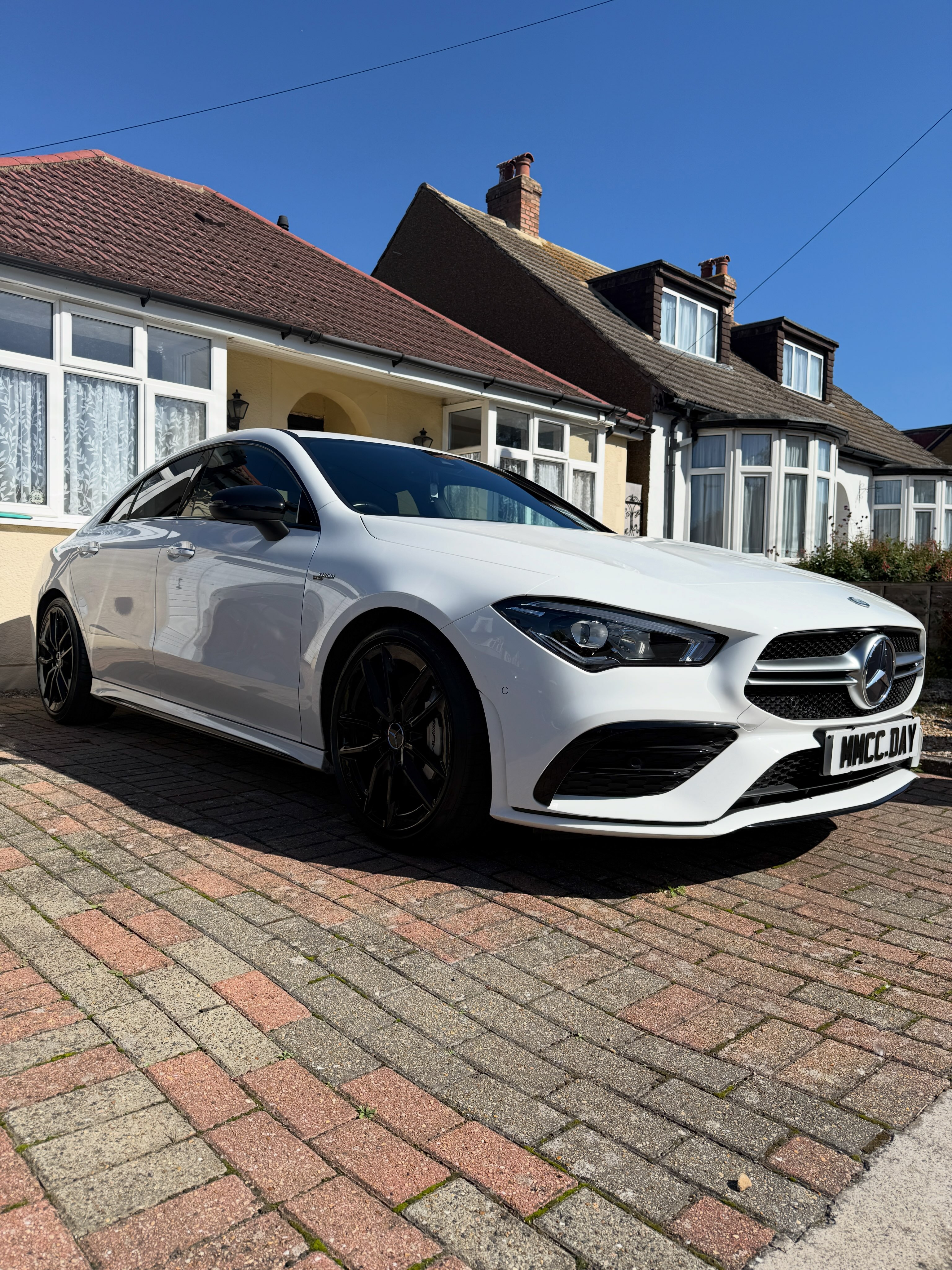
Most of Surbiton’s housing — Victorian and Edwardian terraces, mansion flats near the station, the riverside blocks — was built long before anyone ran an outside tap to every car parking space. Waterless car valeting sidesteps that entirely: it comes to your space in KT6 and never touches your water supply.
Why an outside tap is the problem in Surbiton
Surbiton is a commuter town, and its housing stock says so. The terraces and mansion flats around the station were laid out for people who caught the morning train to Waterloo, not for cars that needed washing on a driveway. Surbiton packs a lot of cars into a compact patch beside the Thames and the Kingston border, and outside space is the first thing that gives. Many have no driveway at all: cars live on the street under a permit, or in a shared forecourt with no tap anywhere near.
That makes the conventional wash a dead end. A hose-and-bucket clean needs water pressure, a tap, and somewhere for the run-off to go. In a flat with a communal entrance, or a terrace with a front door straight onto the pavement, none of those exist. You either haul buckets down a flight of stairs or leave the car dirty — the exact choice a waterless valet removes.
Our mobile car valeting in Kingston upon Thames and the surrounding KT postcodes runs a different system, and it needs nothing from your property.
How waterless valeting works with no tap
The name is literal. A waterless valet cleans the car without drawing any water from your home. Instead of a hose, it uses a pre-treatment that lifts road film, brake dust and grime from the surface, then removes it with clean microfibre cloths. Nothing connects to your water supply, and nothing runs down the kerb.
| Conventional wash | Waterless valet |
|---|---|
| Needs a tap and hose | Needs no tap at all |
| 100–150 litres of water per car | Around 50ml of pre-treatment per car |
| Run-off down the drive or kerb | No run-off |
| You provide the tap and pressure | Everything is brought to you |
The process is paint-safe because the pre-treatment encapsulates the dirt rather than dissolving it: the cloth lifts the particles away, so they are not ground back into the clearcoat the way a dry wipe or a dirty sponge would. The same system runs our car valeting in Teddington and car valeting in East Molesey rounds across the river, so the KT6 side of the Thames is in regular coverage.
Does it actually clean, or just wipe the car down?
A waterless valet is a full clean, not a dust-off. The pre-treatment is formulated to emulsify and lift traffic film and road grime so the cloth carries it away rather than dragging it across the paint. The finish is then sealed with PureShield, a ceramic-grade protection that leaves a hard, water-repellent layer instead of a temporary shine. Wheels, glass and the interior get the same attention as the paintwork.
What a full valet covers
A valet is more than the paintwork. The valet works through the exterior — bodywork, glass, wheels and tyres — then the interior: vacuum, wipe-down of plastics and glass, and a clean that reaches the seams and sills. The paint is finished with ceramic-grade protection rather than left bare. From your side there is nothing to provide — no tap, no hose, no electricity. The valet arrives with everything and works from your parking space, whether that is a forecourt, a permit bay or a shared driveway.
What a Surbiton street leaves on your car
A car that lives on a permit outside a KT6 terrace collects a particular mix: tree sap and blossom in spring, bird droppings year-round, and road film and grit through the winter. Bird droppings and tree sap are acidic and etch into clearcoat if they sit; left for weeks, they leave marks a wash alone won’t lift. That is the case for regular cleaning on a street-parked car — not cosmetics, but keeping the paint from degrading where it sits.
The water you don’t use
For a flat dweller there is no tap to begin with, so the water was never going to be used at all — but the numbers still matter. A conventional wash uses roughly 100–150 litres of water per car, while a waterless valet works through around 50ml of pre-treatment. DEFRA’s greenhouse gas conversion factors value water supply at 0.149 kgCO2e per cubic metre and water treatment at 0.272 kgCO2e per cubic metre; multiplied across a town of terraces and flats, the difference stops being a rounding error.
The inspection that rides along
Every MMCC service includes a 20-point condition inspection, so the visit does more than clean. Each point is recorded as OK, Advisory or Urgent, with notes and photos for anything flagged, and the report reaches you by email and WhatsApp the same day. For a car that lives on a Surbiton street, that is a useful record of when a stone chip became a paint blister or a tyre began wearing unevenly — details spelled out on our 20-point Vehicle Health Check page.
Book your Surbiton valet through Booking.